
Defects tell only part of the story
Assess both tree condition and the people or property that could be affected. A visible defect alone does not describe the entire risk.
Local arborist services
Hazard tree risk assessments in Tauranga that identify trees likely to fail, with practical, prioritised recommendations to protect people and property. Whether you need Tauranga Hazard Tree Risk Assessment for a single tree or a whole section, our team plans each job around the condition of the tree, the available access and the surrounding property, then completes the work with a careful clean-up.
Tell us about your project.
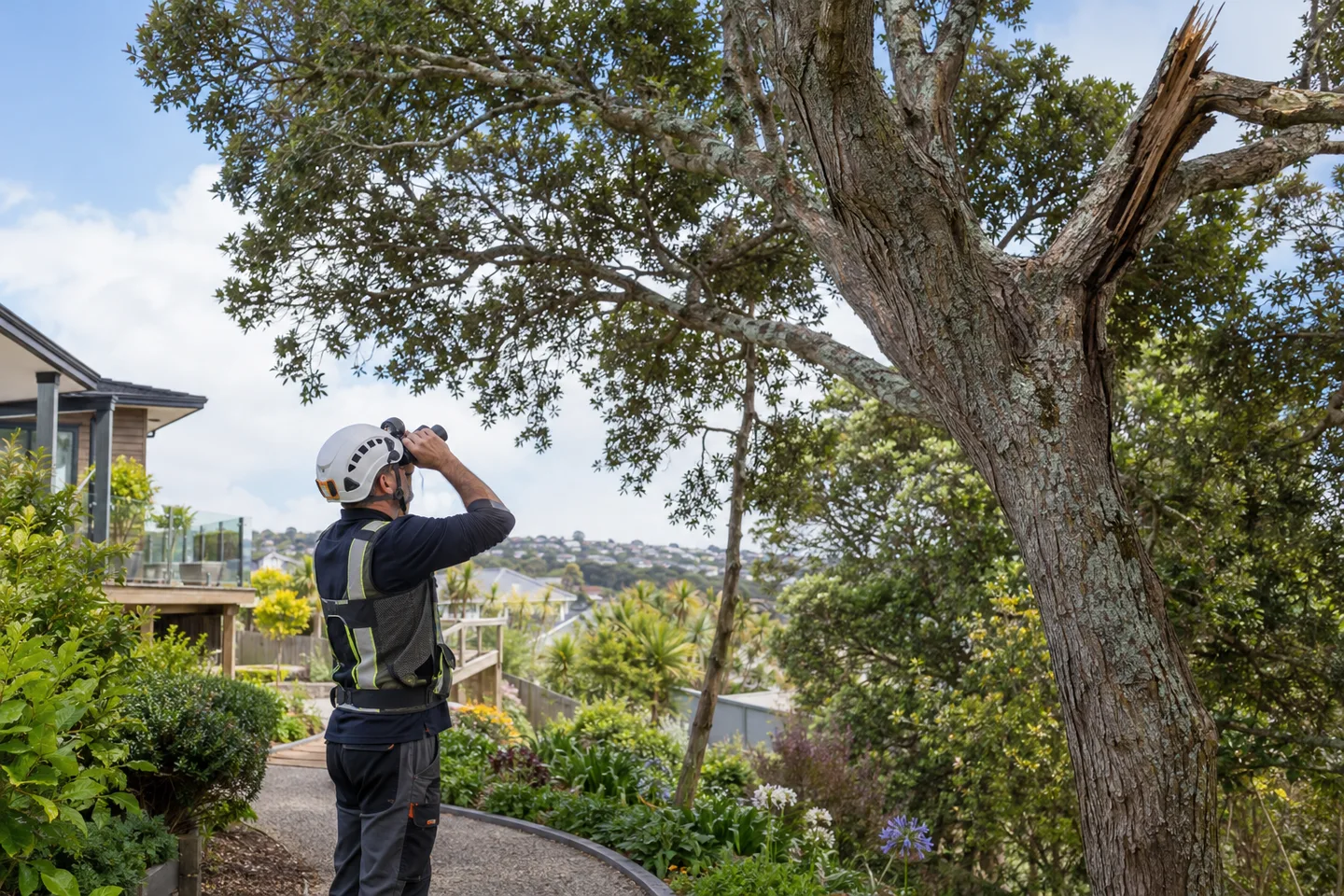
Assess both tree condition and the people or property that could be affected. A visible defect alone does not describe the entire risk.
Frequency of occupancy matters when prioritising action. Paths, parking areas and buildings should be identified during the inspection.
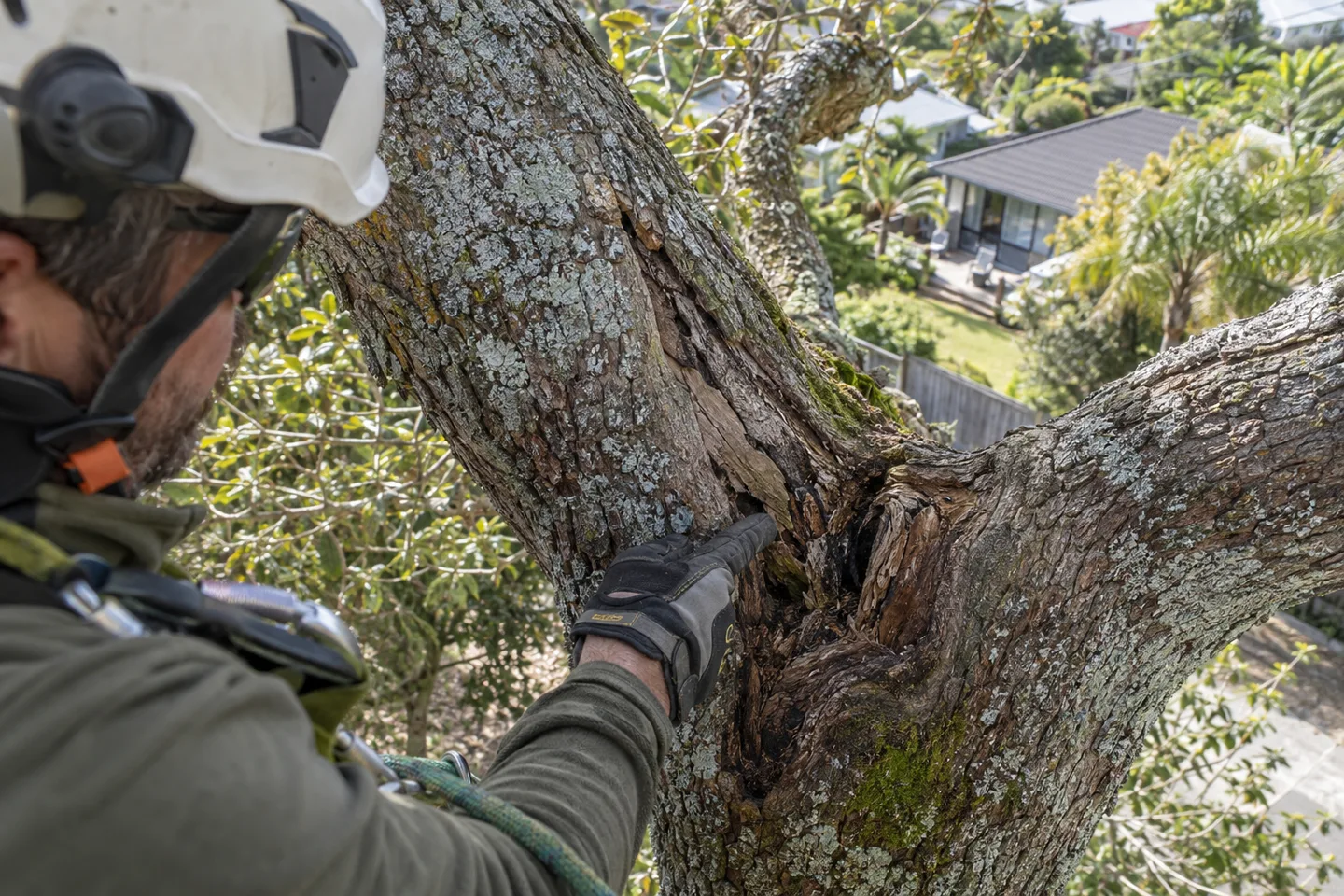
Possible responses include managing access, pruning, further investigation or removal. The recommendation should follow the actual findings.
Storm damage, soil disturbance and new symptoms can justify another inspection. A previous assessment should not be treated as a permanent guarantee.
Explain when you first noticed the concern and whether anything has changed. Storm damage, excavation, a new driveway, soil movement or a change in canopy appearance can help the assessor decide what to examine. Send older photographs if they show how the condition developed.
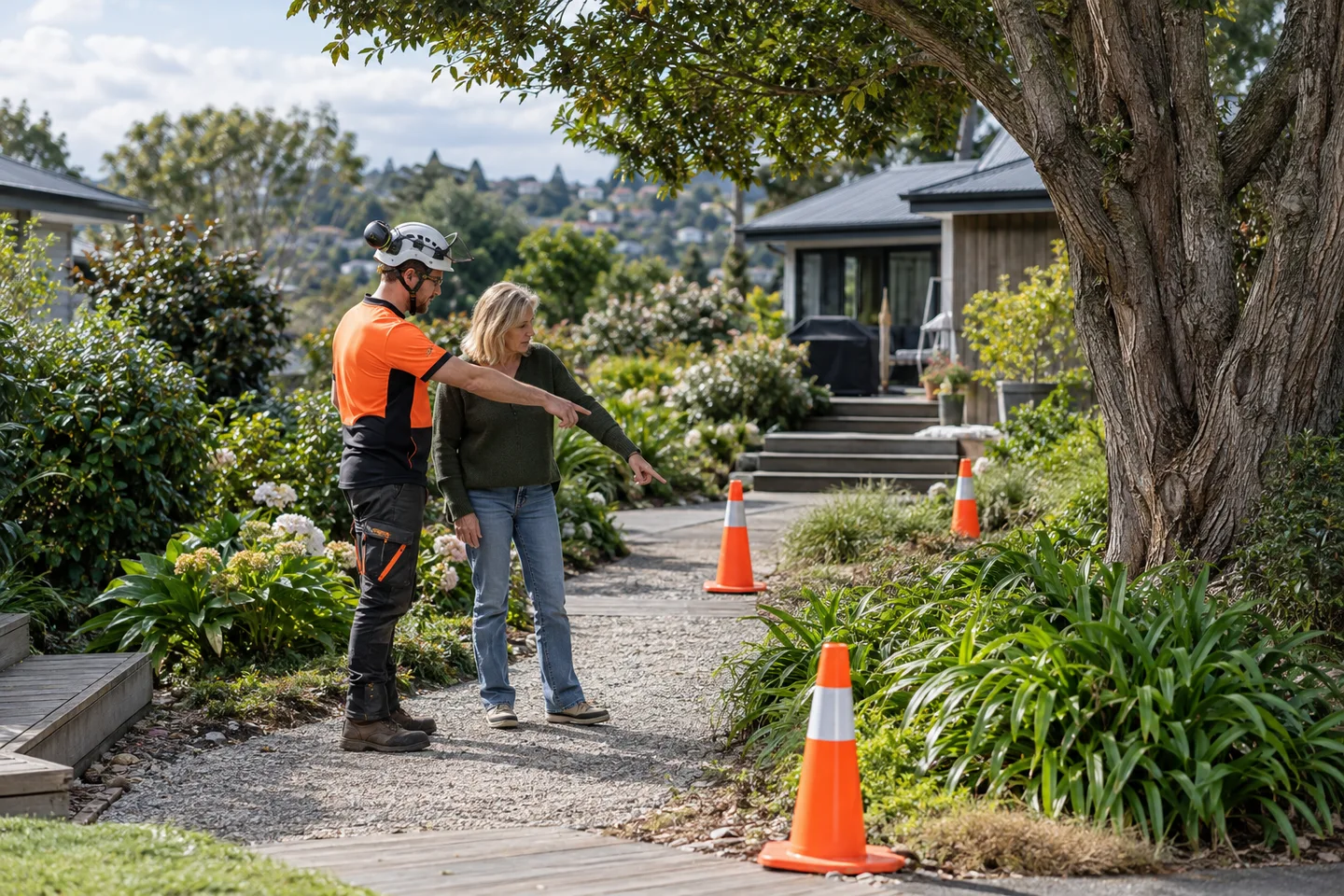
Mark the locations of paths, play areas, buildings and parking beside the tree, and describe when people use them. Include locked gates or boundaries that limit inspection access. This information helps define the assessment area; it is not a substitute for inspecting the tree.
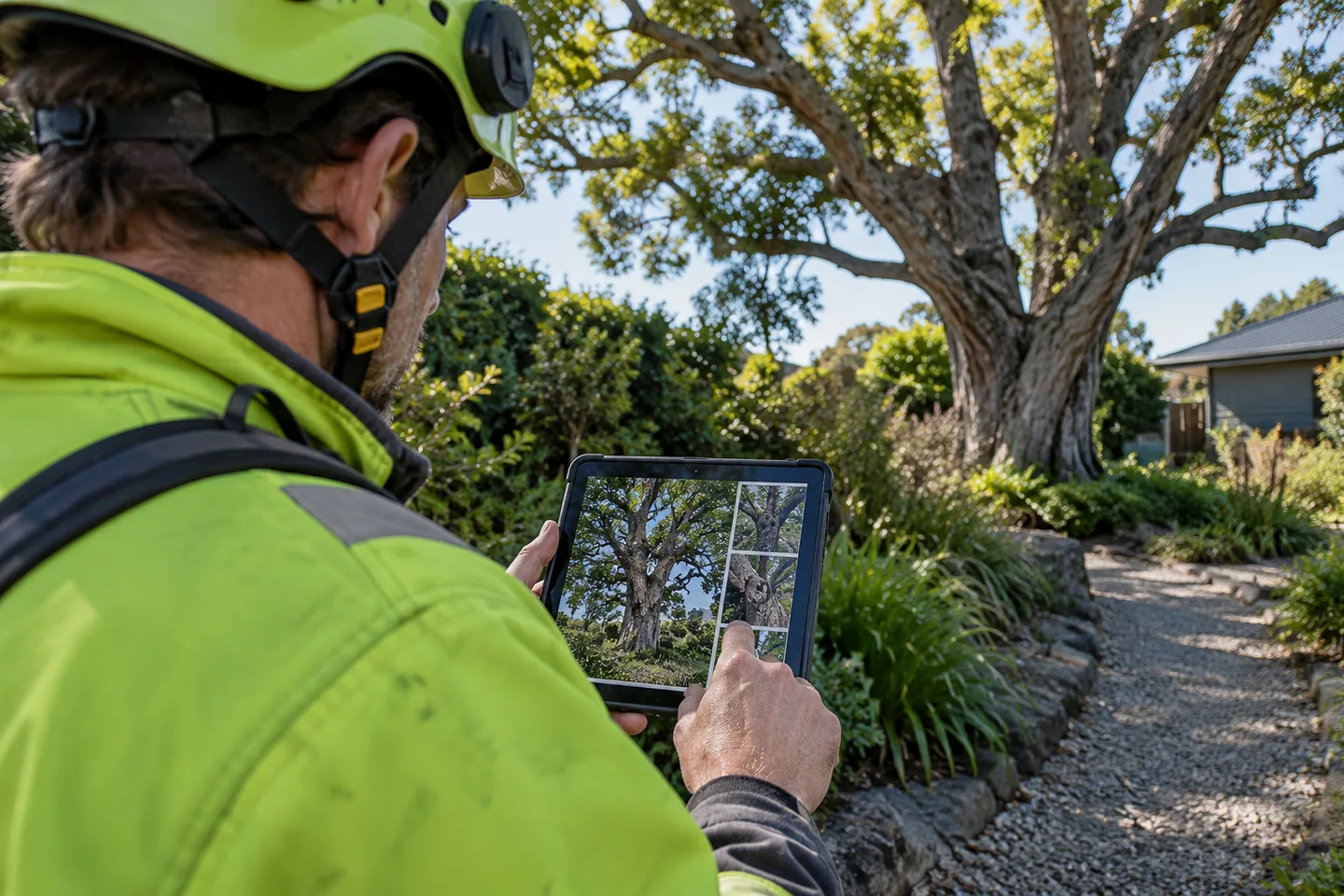
Ask the report to distinguish urgent measures from work that can be scheduled or monitored. Recommendations should relate to the observed defects, the likely consequences and site use. If additional investigation is proposed, clarify what question it is intended to resolve before committing to tree work.
Retain the findings, photographs and any recommended review date. A change in tree condition, occupancy or surrounding ground may justify an earlier reassessment. A report describes the evidence available at the inspection; it cannot guarantee that a living tree will never fail.